
From Food Waste and Pyrolytic Liquids to Bioplastics: SYMSITES at PolyConf 2025
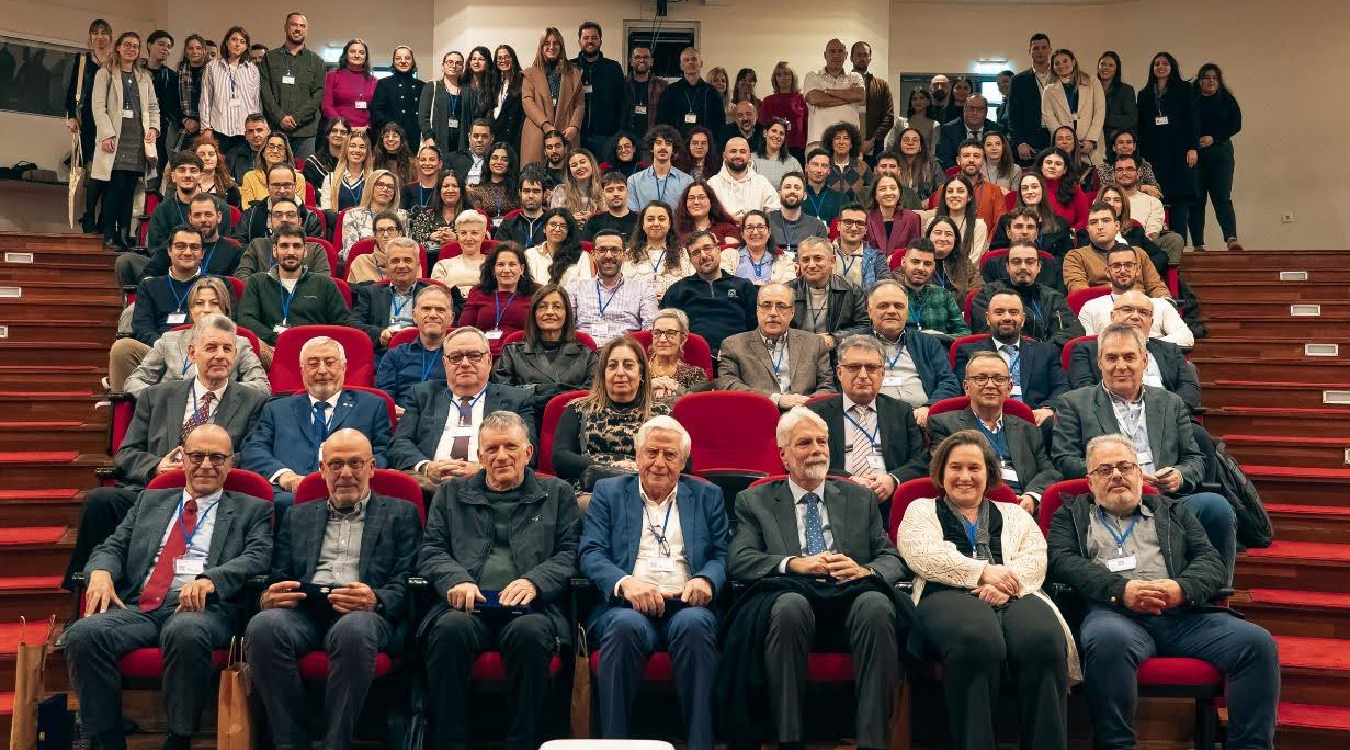
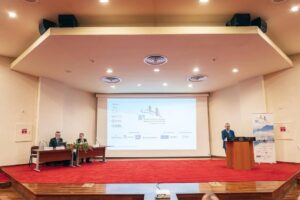
As part of its dissemination and knowledge-sharing activities, experimental results of the SYMSITES project were presented at the 15th Hellenic Polymer Society International Conference (PolyConf 2025), held from 3 to 6 December 2025 at the Conference and Cultural Center of the University of Patras in Patras, Greece.
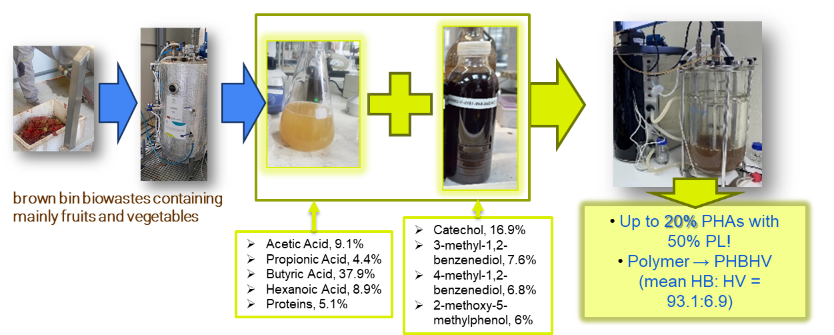
During the conference, experimental results generated through a collaborative study between SYMSITES partner National Technical University of Athens and partner Greene Enterprise were presented through a scientific poster “Biosynthesis of Polyhydroxyalkanoates (PHAs) from Olive Stones Pyrolytic Oil and Acidified Food Wastes.”
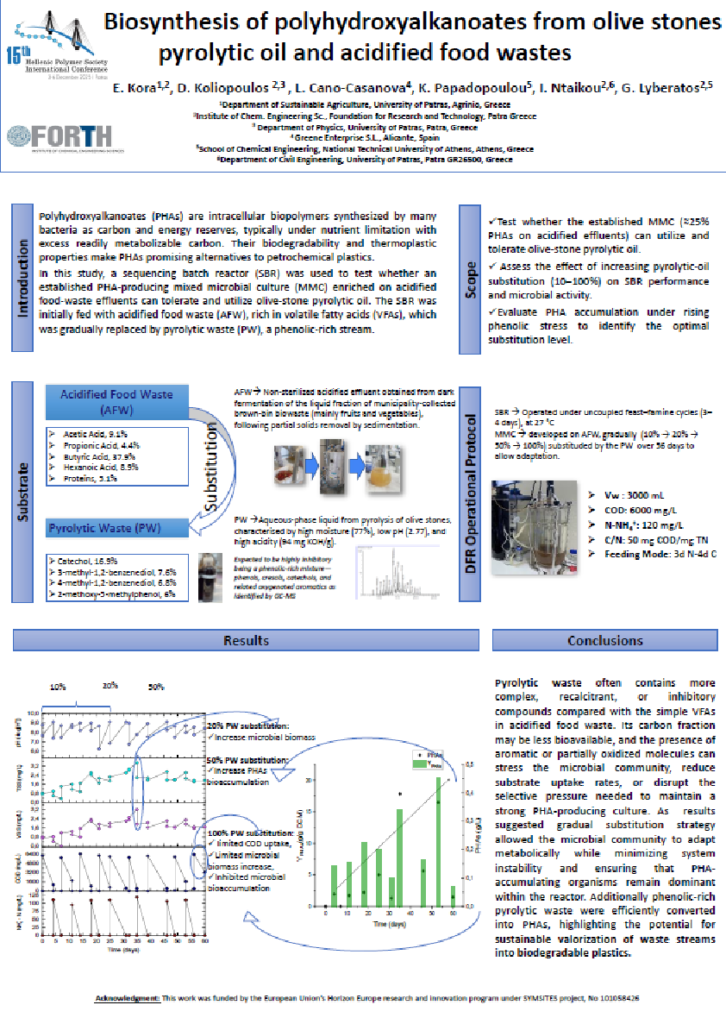
The study addressed the co-valorisation of complex waste streams through the integration of thermochemical and biological processes. In particular, it investigated the use of phenolic-rich pyrolytic liquids derived from olive-stone pyrolysis, produced within SYMSITES, in combination with acidified food waste effluents originating from the Greek Ecosite for PHAs production based on microbial consortia (MC) generated as well within the project.
In brief, the MC were initially developed on acidified food waste, and were gradually exposed to increasing fractions of pyrolytic liquid. This stepwise substitution strategy enabled the systematic evaluation of microbial adaptation, process stability, and PHAs accumulation under progressively increasing inhibitory stress.
The results demonstrated that:
- Gradual substitution is essential to ensure stable reactor operation.
- Microbial adaptation occurs even under high phenolic loads.
- Optimal PHAs accumulation was achieved at intermediate substitution levels.
- PHAs production was maintained even at full substitution, highlighting the potential of pyrolytic liquids as an alternative carbon source.
Overall, these findings support the feasibility of converting challenging, inhibitory waste streams into biodegradable bioplastics, reinforcing the circular economy concept promoted by SYMSITES and its contribution to sustainable materials production.
Participation in PolyConf 2025 significantly enhanced the visibility of the SYMSITES project, promoted scientific exchange with the international polymer and bioprocessing community, and strengthened the project’s dissemination impact at European and international level.