
Evaluating The Potential For Industrial-Urban Symbiosis For Biofuels And Bioplastics Production: A Study from the National Technical University of Athens
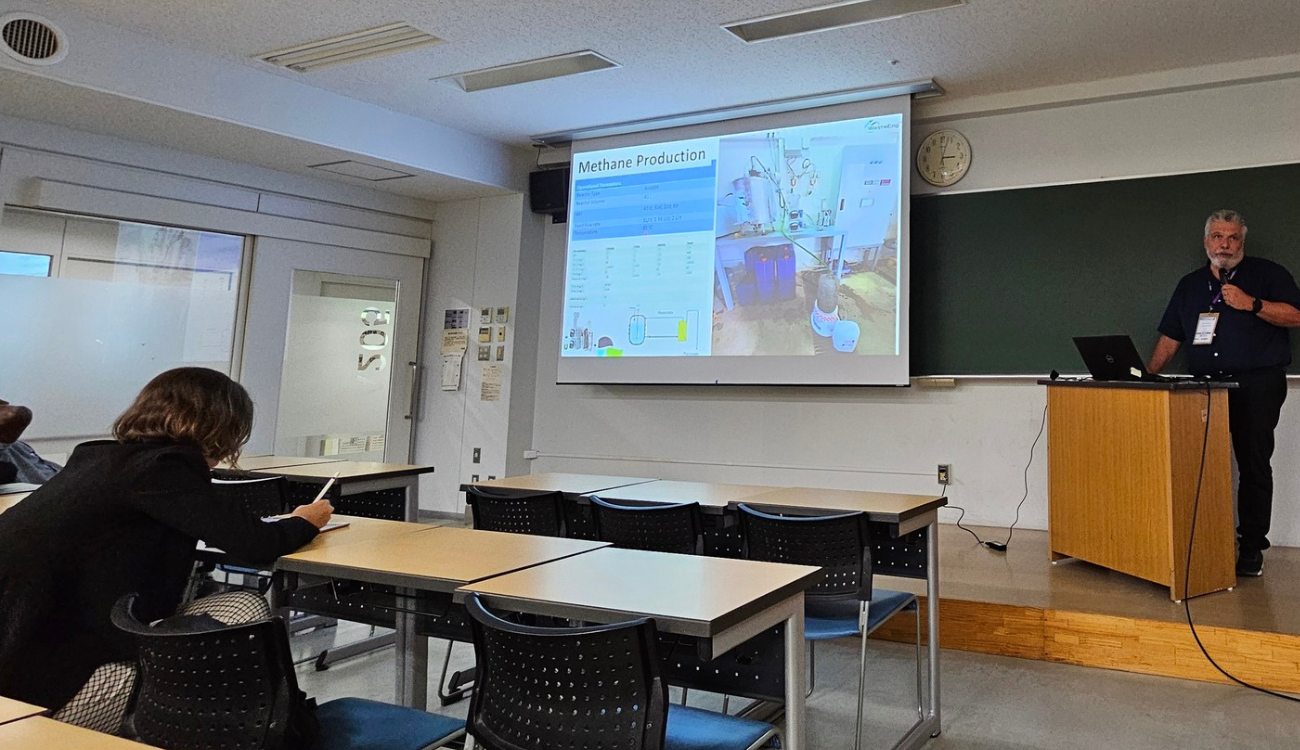
In the frame of the SYMSITES project, the National Technical University of Athens studied the potential of waste management for industry and municipality (Industrial-Urban Symbiosis – I-US) through material and energy exchanges between municipality and industry. It improved biofuel and bioplastic production’s efficiency and environmental performance via such a combined waste valorization. The research, entitled “Evaluating The Potential For Industrial-Urban Symbiosis For Biofuels And Bioplastics Production”, was presented by Professor Gerasimos Lyberatos, during the 10th International Conference on Engineering for Waste and Biomass Valorization, WasteEng24 in Sendai, Japan, from August 20-23, 2024.
10th International Conference on Engineering for Waste and Biomass Valorization
The 10th International Conference on Engineering for Waste and Biomass Valorisation, known colloquially as WasteEng2024, was held at Tohoku University’s Kawauchi Campus in Sendai, Japan, from August 20-23, 2024. This conference marked a significant milestone in the field, celebrating 20 years of research and innovation aimed at transforming waste and biomass into valuable resources, driving the global transition towards sustainability.
The depletion of natural resources, the economic stress on streams and raw materials, the ever-increasing greenhouse emissions and the awareness of the citizens for sustainable development are factors that promote the transformation and safe reuse of waste, residues and biomass into valuable materials and energy/fuel. This process is called valorisation. Practices that reduce emissions and integrate life cycle assessment of technologies and end-of-pipe products are also particularly concerned. This approach is raising a strong interest worldwide and represents a key issue to achieve sustainable development.
This interdisciplinary conference bridges various fields of engineering science including Environmental, Chemical, Civil Engineering, and Management science. The conference is also of interest to non-academic groups such as industry, local and national governments interested in the beneficial use and reuse of residues, biomass and waste. Each conference issue gathers research articles, reviews and case studies (both pilot-plant and full-scale).
Waste to Energy and Products
The National Technical University of Athens (NTUA) team explored how to produce biofuels such as methane and hydrogen as well as bioplastics from three waste streams: Olive Industry Wastewater (OIWW), Liquid Fraction of Food Waste (LFFW) and Municipal Wastewater (MWW). For methane production, anaerobic digestion under mesophilic conditions was carried out initially by using a 40L CSTR and then by adding a membrane unit and converting it to an AnMBR. A feed composition of 91.7% MWW, 3.3% LFFW, 5% OIWW was found to be appropriate as higher percentages of OIWW proved to be detrimental to the operation of the reactor.
The liquid fraction of food waste contains carbohydrates and could be used to generate hydrogen and bioplastics (PHAs). Thus, an alternative possibility is its upfront valorization to this end leaving a stream that could then be co-digested with OIWW. In order to evaluate this possibility, hydrogen production from LFFW was evaluated, exploring simultaneously the possibility of minimizing water use, by using municipal wastewater for dilution of LFFW. Also, the effluents from the hydrogen producing reactor were used as carbon source for the development of microbial consortia (MC) of polyhydroxyalkanoates (PHAs) producing microorganisms. The development was conducted under sequential carbon (C) and nitrogen (N) limitation, in two draw-fill (DFR) lab scale reactors operated with different carbon-to-nitrogen ratios (C/N) aiming to assess the differences of the structure of the MMC and their subsequent efficiency to accumulate PHAs under batch (dynamic) conditions using the acidified effluent of hydrogen producer reactor.
The benefits
Industrial and municipal wastewater, along with the liquid fraction of food waste may be effectively co-digested using an anaerobic membrane bioreactor. The liquid fraction of food waste may be subjected to two pre-valorization processes generating hydrogen and bioplastics. This experimental work has generated the required information to properly design and operate a pilot-scale process for the demonstration of Industrial-Urban symbiosis.