
Potential and Challenges of Integrated Waste Treatment Systems: Insights from the SYMSITES EcoSites
The SYMSITES project represents an important step forward in developing integrated and sustainable solutions for urban and industrial wastewater and waste treatments. By combining innovative technologies with a comprehensive sustainability assessment framework, the project demonstrates how diverse waste streams can be managed through a single, integrated system that simultaneously generates high value resources.
Understanding the sustainability performance of emerging treatment technologies is essential before they can be implemented at larger scales. Within the SYMSITES project, a dedicated assessment was conducted to evaluate the environmental, economic, and social performance of the 4 pilot EcoSites developed during the time of implementation of the project, providing valuable insights into the potential and challenges of integrated waste treatment systems.
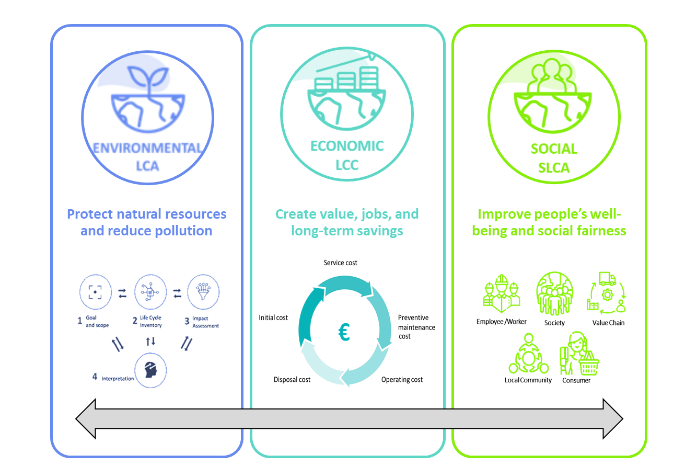
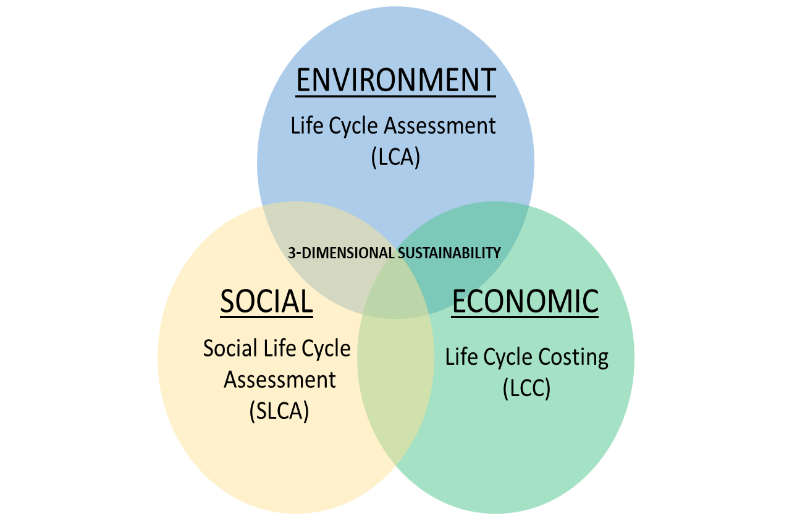
Throughout the project, several technologies were studied and developed at laboratory scales – some of which are transferred to pilot scales to explore their potential for future application in real world treatment systems. The technologies utilized in the pilots were evaluated through a three-dimensional sustainability approach that considered environmental impacts, economic feasibility, and potential social impacts. This integrated assessment allowed researchers to identify the most significant challenges and opportunities associated with each technology while highlighting pathways for improvement. The analysis applied a comprehensive sustainability framework combining three complementary methodologies: Life Cycle Assessment (LCA), Life Cycle Costing (LCC) and Social Life Cycle Assessment (SLCA).
The assessment covered the EcoSites developed at pilot scale in Greece, Austria, Spain, and Denmark. Each installation represents a localized configuration designed to treat specific waste streams and produce high value new resources such as biogas, fertilizers, or treated water for reuse. The sustainability evaluation followed the development of these systems from their construction phase to their operational optimization, enabling researchers to identify performance trends and operational hotspots.
Environmental Impacts Insights from Pilot Operations
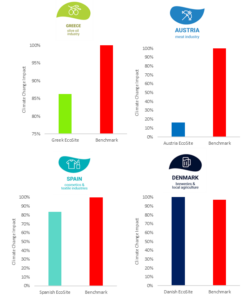
The environmental evaluation focused on the impacts associated with the treatment processes, with particular attention to climate change impacts, which is the total amount of greenhouse gases (GHGs) produced. Results indicate that several of the EcoSites already show promising environmental performance when compared with conventional treatment approaches (i.e., benchmarks).
In particular, the Greek, Austrian, and Spanish EcoSites demonstrated lower impacts in the climate change category compared to benchmark technologies used to treat similar waste streams. The Danish EcoSite showed comparable results, with only a small difference relative to its conventional benchmark.
Energy use emerged as the most significant factor influencing environmental performance. Since the EcoSites currently operate at pilot scale, their energy demand per unit of treated waste is higher than that of large industrial treatment plants. This reflects a well known scaling effect: smaller facilities often require more energy per cubic meter of treated material.
Local conditions also play an important role. For example, the Danish EcoSite operates in the colder climate of Bornholm, where additional energy is needed to maintain optimal process conditions during winter. At the same time, the site benefits from a fully renewable electricity supply, demonstrating how the use of renewable energy can substantially reduce the environmental footprint of treatment operations.
Economic Performance
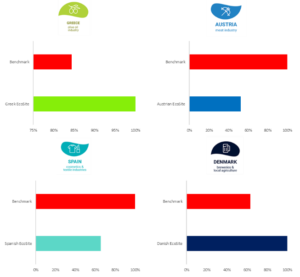
The economic assessment examined the cost structure of the EcoSites using an Life Cycle Costing (LCC) approach. Unlike earlier project analyses that focused primarily on operational costs, the final evaluation considered both capital expenditures (CAPEX) and operational expenditures (OPEX). This provides a more realistic picture of the financial implications of implementing such systems. As expected for pilot installations, capital costs represent a significant share of total costs.
At this development stage, infrastructure investments tend to exceed operational expenditures. Labor costs were not included in the operational analysis, as staffing requirements at pilot scale are not representative of industrial operations and could distort the results.
When compared with conventional treatment technologies, the EcoSites in Spain and Austria demonstrated better economic performance. In contrast, the Greek and Danish EcoSites showed higher costs per unit of treated waste than the benchmark. This difference is largely linked to energy consumption levels and the relatively small volumes currently processed at pilot scale. These findings highlight the importance of process optimization and scaling. As treatment capacity increases and operational conditions are refined, energy efficiency is expected to improve and unit costs to decrease, strengthening the economic viability of the systems.
Social Sustainability Considerations
The sustainability assessment also explored the social dimension of the EcoSites through a Social Life Cycle Assessment approach (SLCA). This analysis considered indicators related to stakeholder like: workers, society, value chain and local community.
Results indicate that integrated treatment systems can generate positive social outcomes compared with conventional alternatives. In particular, the EcoSites in Spain and Austria demonstrated lower social risks for several evaluated indicators. Improvements were observed in areas such as worker safety, fair competition within the sector, and interaction with local communities. These findings emphasize the importance of considering social aspects alongside environmental and economic performance when evaluating new infrastructure solutions.
Lessons for future implementation
The sustainability assessment of the SYMSITES EcoSites highlights both the potential and the challenges associated with integrated treatment systems at pilot scale.
While some installations already outperform conventional technologies in specific environmental indicators, others reveal the influence of operational scale, local conditions, and energy demand on overall performance. Importantly, the analysis suggests that many of the current limitations are linked to the pilot nature of the installations rather than the underlying concept itself. As systems are scaled and optimized for industrial operation, improvements in energy efficiency and cost performance are expected.
Ultimately, the results provide evidence-based insights that can support future planning and implementation of integrated treatment systems. By adapting solutions to local conditions and continuously improving operational efficiency, EcoSites have the potential to become an important component of more sustainable waste and wastewater management strategies.